Yacht Toys & Equipment Split Croatia — 2026 Adriatic Catalog
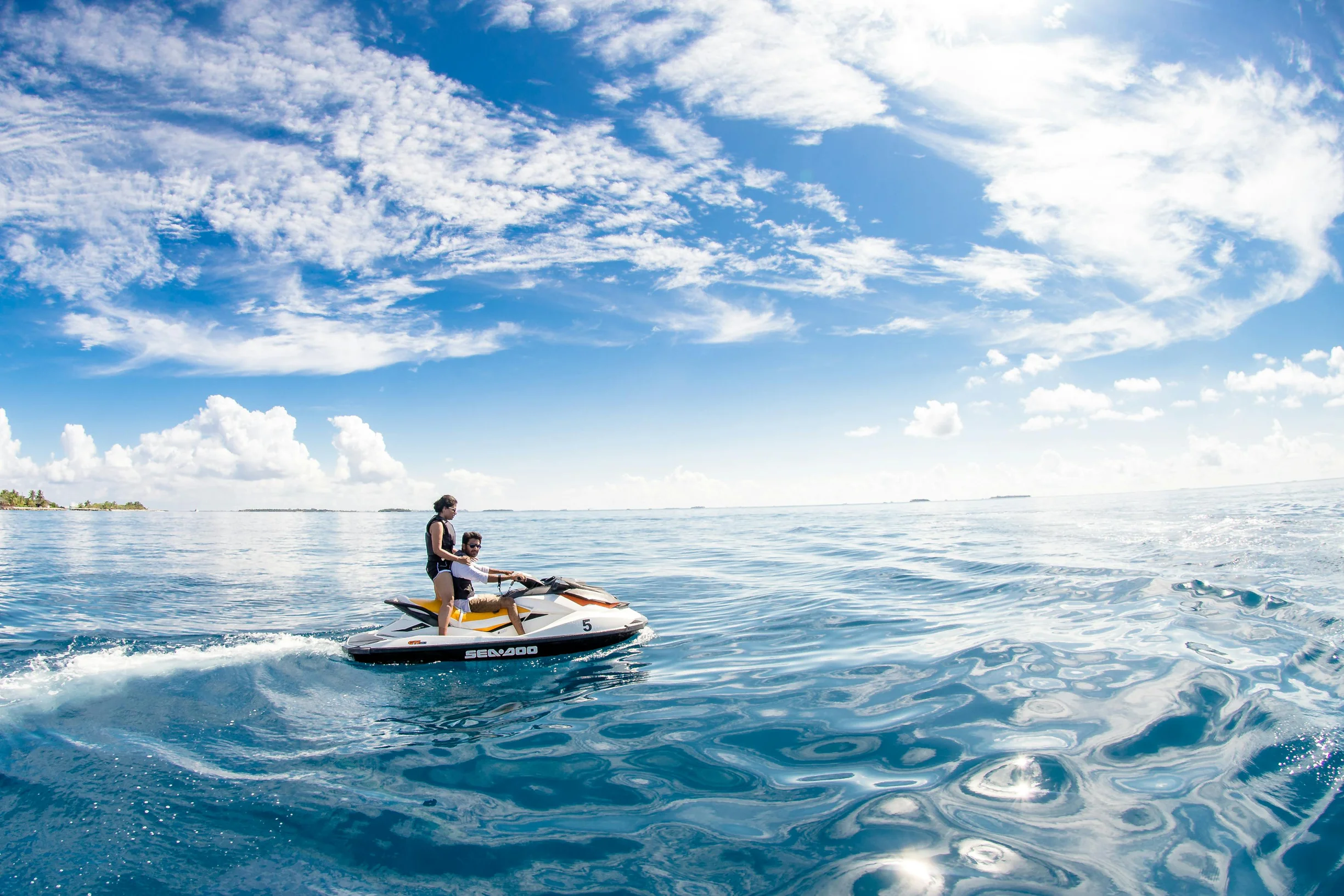
Complete 2026 catalog of yacht toys for catamaran charters from Split — e-foils, jetskis, Seabobs, slides, fitness, cinema with weekly prices.
Read more
Updated May 2026.
Croatia is the most-chartered catamaran cruising ground in Europe and the country where the cat has most decisively overtaken the monohull as the family-charter default. The reason is structural: Croatia’s tight rotation of stern-to mooring, restaurant pontoons, and short-hop daily distances reward the catamaran’s space, draft and stability. This guide is the practical 2026 operating manual for a catamaran charter in Croatia — where to base, when to go, what to expect, and what it actually costs.
Croatia’s coast has three features that map almost perfectly onto a catamaran’s strengths. Short hops — most charter legs run 12-25 NM, where the catamaran’s space-per-mile efficiency beats the monohull’s pointing performance. Sandy and shallow anchorages — Croatian bays at Stari Grad, Vis, the Pakleni, Kornati restaurant moorings — all favour the catamaran’s 1.1-1.4 m draft over the monohull’s 1.8-2.2 m. Family and group charters — Croatia’s primary charter customer is the 6-8 person family or group, and the catamaran’s flat decks, big cockpit, twin swim platforms and four-cabin layout dominate that profile.
The trade-off, as ever, is cost. A 45-foot catamaran in Croatia in 2026 charters at 2.5-3x the rate of a comparably-sized monohull. For couples and 4-person sailing crews, the monohull remains the better value. For everyone else, the cat is the right call.
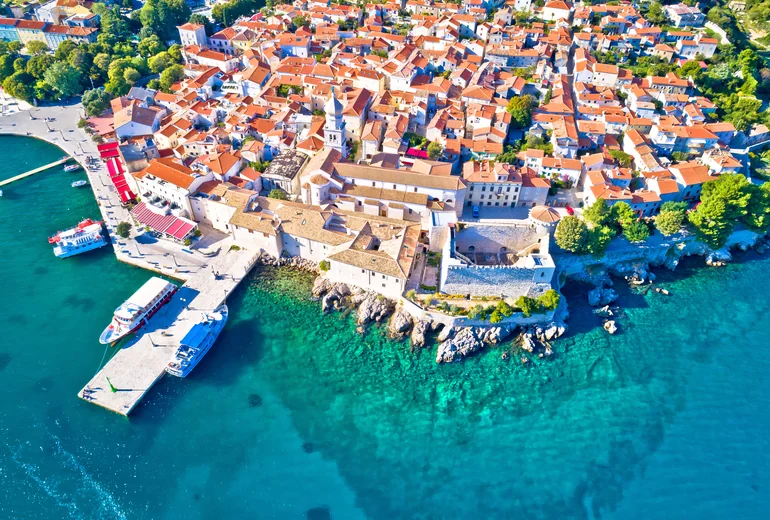
Central Dalmatia — Split, Hvar, Vis, Brač, Pakleni, the islands south of Šibenik — is the busiest catamaran cruising ground. The largest cat fleet, the densest restaurant scene, the most marquee anchorages. Every major operator runs catamarans from Split or Trogir. See our 7-day Split itinerary for the working route.
North Dalmatia — Zadar, Šibenik, Trogir, Kornati, Krka. The Kornati archipelago is one of the most distinctive cat-friendly cruising areas in the Mediterranean — narrow channels, restaurant pontoons that take catamarans cleanly, anchorages with sandy bottoms in 6-12 metres. The Zadar/Kornati route covers this ground.
South Dalmatia — Dubrovnik, Mljet, Korčula, Lastovo, Pelješac. The wildest of the four. Longer legs between islands, smaller cat fleet, the prettiest single town on the coast (Dubrovnik). Best for second or third charterers who want quieter waters.
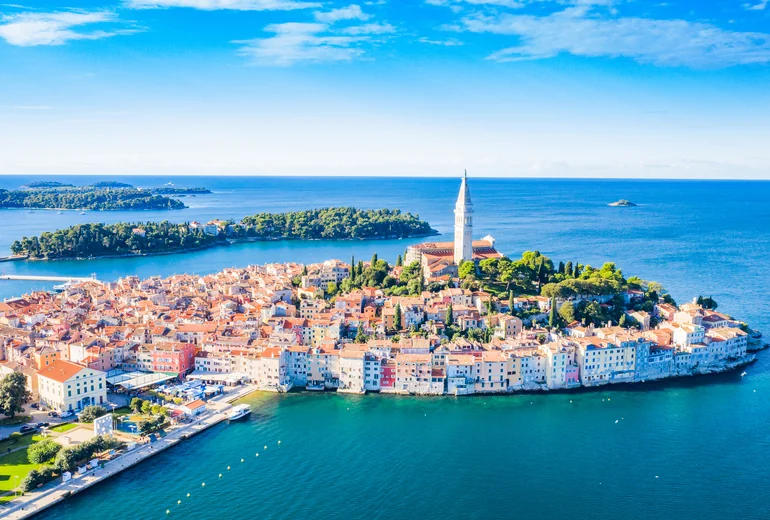
Istria and Kvarner — Pula, Rovinj, Cres, Lošinj. The northern Adriatic. Smaller catamaran fleet, cooler water, more architectural towns. A different aesthetic from Dalmatia. Worth a charter for repeat visitors who’ve already done the south.

Split: ACI Split (central) and Marina Kaštela (newer, larger) hold the largest catamaran fleets in Croatia. Direct flights to Split from most northern European hubs.
Trogir: ACI Trogir is 25 minutes from Split airport — closer than the Split bases. Saturday handover is calmer than Split’s. The cat fleet is mid-size, well-maintained.
Šibenik / Biograd: Marina Mandalina and Marina Frapa serve the North Dalmatia and Kornati cat fleet. Closer to the Kornati than Split-based catamarans.
Dubrovnik: ACI Dubrovnik (Komolac) and Marina Frapa Dubrovnik. Smaller cat fleet, newer average boat age, the southern launchpad.
Pula: ACI Pula gateway to Istria. Smaller fleet still, but growing year-on-year. The repeat-charterer’s pick.
May: water at 17-19 °C. Cool swim, light winds, prices 30% under peak. Catamaran inventory has slack capacity. Good for sailing-first crews.
June: the sweet spot. Water reaches 22 °C, the marquee crowd hasn’t arrived, the maestral is reliable but not aggressive. Catamaran prices 15-25% below peak.
July-August: peak. Hvar town fills by 16:00, ACI marinas at capacity, Italian-German vacation overlap turns Hvar, Split, Trogir into floating multi-language villages. Catamaran prices peak.
September: the locals’ month. Water at 24 °C, schoolkids gone, marina prices ease. Catamaran availability returns. The single best month for a Croatian catamaran charter.
October: shoulder. Some konobe close after the 15th. The cheapest viable cat charter window.
The standard pickup is Saturday 17:00 at ACI Split or Marina Kaštela. Provision at Tommy on the way out of town. The realistic week:
Day 1 (Sat eve): Split → Maslinica, Šolta (12 NM). Easy first night, mooring buoy in the Maslinica village bay or anchor in 6-9 m sand. Konoba Grih dinner.
Day 2: Maslinica → Pakleni archipelago (15 NM). Anchor at Vinogradišće or take ACI Palmižana. Shuttle into Hvar town for evening.
Day 3: Pakleni → Vis town (22 NM). Mid-morning departure, lunch stop at Stiniva on Vis south coast, evening in Vis town harbour. Konoba Roki’s reservation worth the taxi.
Day 4: Vis → Komiža (10 NM) and the Blue Cave at Biševo (early morning). Continue back to Vis or to Stari Grad on Hvar’s north coast (24 NM).
Day 5: Stari Grad → Bol on Brač (12 NM). Zlatni Rat beach anchorage; Bol town walk.
Day 6: Bol → final Pakleni night (16 NM). Last anchorage, last konoba.
Day 7: Pakleni → Split (15 NM). Fuel up at Marina Kaštela, handover by 13:00.
Total: ~120 NM, average 17 NM per day. Cat-friendly distances, no exposed-passage commitments unless conditions specifically allow. Cross-reference: 7-day Split-to-Dubrovnik itinerary for the linear one-way version.

For a 7-day mid-June 2026 charter on a 45-foot catamaran from Split, crew of 8:
— Boat charter: €13,000-18,000
— Fuel: €600-900
— Marina overnights (3 × €120-180 cat-rate): €450-650
— Port taxes: €150
— Damage waiver: €450
— Provisioning (8 people): €1,000-1,300
— Dinners ashore (4 × 8 × €35): €1,120
— Cleaning fee: €200
— Total: €17,000-22,800 (€2,125-2,850 per person)
Add a hostess at €1,300-1,500 (the highest-leverage upgrade for family cat charters). Add a skipper at €1,750-2,000 if no one onboard is licensed. Catamaran security deposits run €5,000-8,000, held on a card, released after damage-free return. See average costs of catamaran rentals in Croatia for the full breakdown.
Modern catamaran charter Croatia fleets centre on three boat tiers. 40-42 ft sleep 6-8 in 4 cabins, work for one family or 2 couples. 45-47 ft sleep 8-10 in 4-5 cabins, the most-chartered tier in Croatia. 50-55 ft sleep 10-12 in 5-6 cabins, larger group format. Tier-1 builders dominate the new charter fleet: Lagoon, Bali, Fountaine Pajot, Catana, Excess. Selecting the right cat for your group walks through the layout and budget choice.
Croatia accepts the ICC, RYA Day Skipper, US Sailing Bareboat, and several national equivalents for the registered skipper. A separate VHF certificate is also required — most operators check both at handover. Charter security deposits cover damage above the policy excess. The ACI marina system spans 22 marinas; pre-booking is mandatory in season for ACI Hvar, ACI Palmižana, ACI Korčula, ACI Split, and ACI Skradin (gateway to Krka National Park).
The first is booking peak August. Croatia in August has more catamarans per square kilometre than any other Mediterranean coast — Hvar town, the Pakleni, Korčula, Mljet all become floating parking lots. Move to late June or September. The second is under-booking marinas. ACI Hvar, ACI Korčula, ACI Skradin in season need to be booked at the time you book the charter. Day-of arrivals get turned away. The third is underestimating cat-specific marina rates. Catamaran berth premiums add 50-80% to monohull rates; budget accordingly.
For specific catamaran routes: the Split-to-Dubrovnik one-way, the Zadar/Kornati route, and the island-hopping from Trogir family week all walk specific routes in detail. For booking format choice, see how to book a catamaran. For the must-visit islands, which Croatian islands are must-visits covers the marquee picks.
For families and groups of 6+, yes — the space, swim platforms, stability and four-cabin layout justify the 2.5-3x cost premium. For couples and 4-person sailing crews, the monohull remains the better value. The decision is about crew size and use mode, not about the boats themselves.
Premium 50+ foot catamarans for peak weeks book by November 2025; standard 45-foot cats book by February 2026. Shoulder weeks (June, mid-September) are bookable 2-4 months ahead. How early should I book covers the booking-window pattern.
Yes — Dubrovnik to Tivat is 35 NM. Most operators allow it on multi-week charters. Cross-border formalities take an hour each way. Catamarans handle the crossing well in normal summer weather.
A 7-day round trip from Trogir or Split staying within Central Dalmatia. Distances are short, anchorages are sheltered, marina backup is everywhere if conditions deteriorate. Avoid the Vis/Lastovo open-water legs on a first charter.
Yes — at most Croatian bases the new-boat fleet is 60-70% catamaran. Monohulls remain available, often at significant discounts to the cat rate, and remain the better value for sailing-first crews of 4. The shift is structural, driven by family-charter demand growth.
Modern charter catamarans in Croatia ship with substantial solar arrays (400-1,200 W) and lithium battery banks. The result: at anchor, the boat runs fridge, navigation, lights and water-pump for 24-48 hours without engine charging. Hybrid-electric tenders (Torqeedo, ePropulsion) are increasingly standard on premium charter cats — silent shore tendering and recharge from the boat’s house bank. Most charter cats include 1-2 paddleboards, snorkel sets for the crew, and basic galley kit. Bring kid-sized snorkels and your own dry-bag if family-bound.
The Croatian charter booking process splits into three windows. October-February: peak-week bookings for the next summer, deepest fleet selection, lowest prices. March-May: shoulder availability, mid-tier choice, last-minute deals begin to appear. June onwards: late-availability hunting, discounts of 10-25% appear on unsold weeks. Before you commit to any catamaran charter Croatia operator, confirm: the boat’s exact age and last-major-service date, the crew layout (4 vs 5 cabin), included extras (paddleboards, snorkel kit, BBQ), the security-deposit amount and damage-waiver options, fuel-tank policy at handover, and the Saturday handover window timing.